A vending machine that goes down at 2 a.m. does not get fixed until morning — and every hour of downtime costs sales, shortens component life, and erodes the operator’s trust in your hardware. Today’s unattended retail terminals pack refrigeration, power supplies, control boards, displays, payment modules and mechanical dispensing units into a single compact cabinet. That density creates real heat, and there is no technician standing by to notice when temperatures start climbing.
| 1 | 3 | 5 |
| 2 | 4 | 6 |
These machines run 24 hours a day in shopping malls, office buildings, hospitals, schools, subway stations, factories and outdoor public areas. When airflow fails, the consequences stack up fast: compressor overload, unstable cabinet temperatures, electronic failures, display malfunctions, payment errors, unplanned downtime.
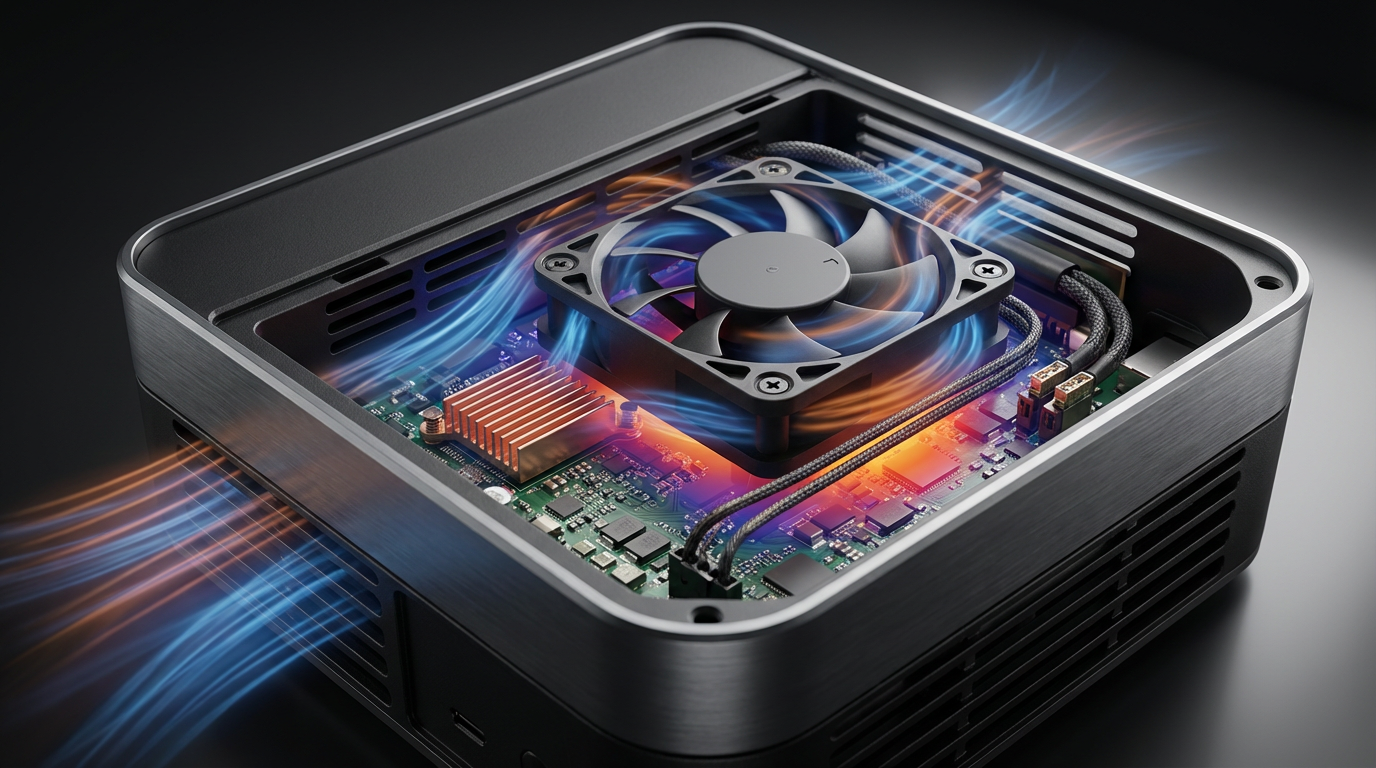
That makes the cooling fan one of the most consequential components in any vending machine design. The right fan is not just about airflow. It has to handle continuous duty cycles, manage heat in tight spaces, tolerate dust, stay quiet in public environments, and hold up long enough to keep service calls off the schedule.
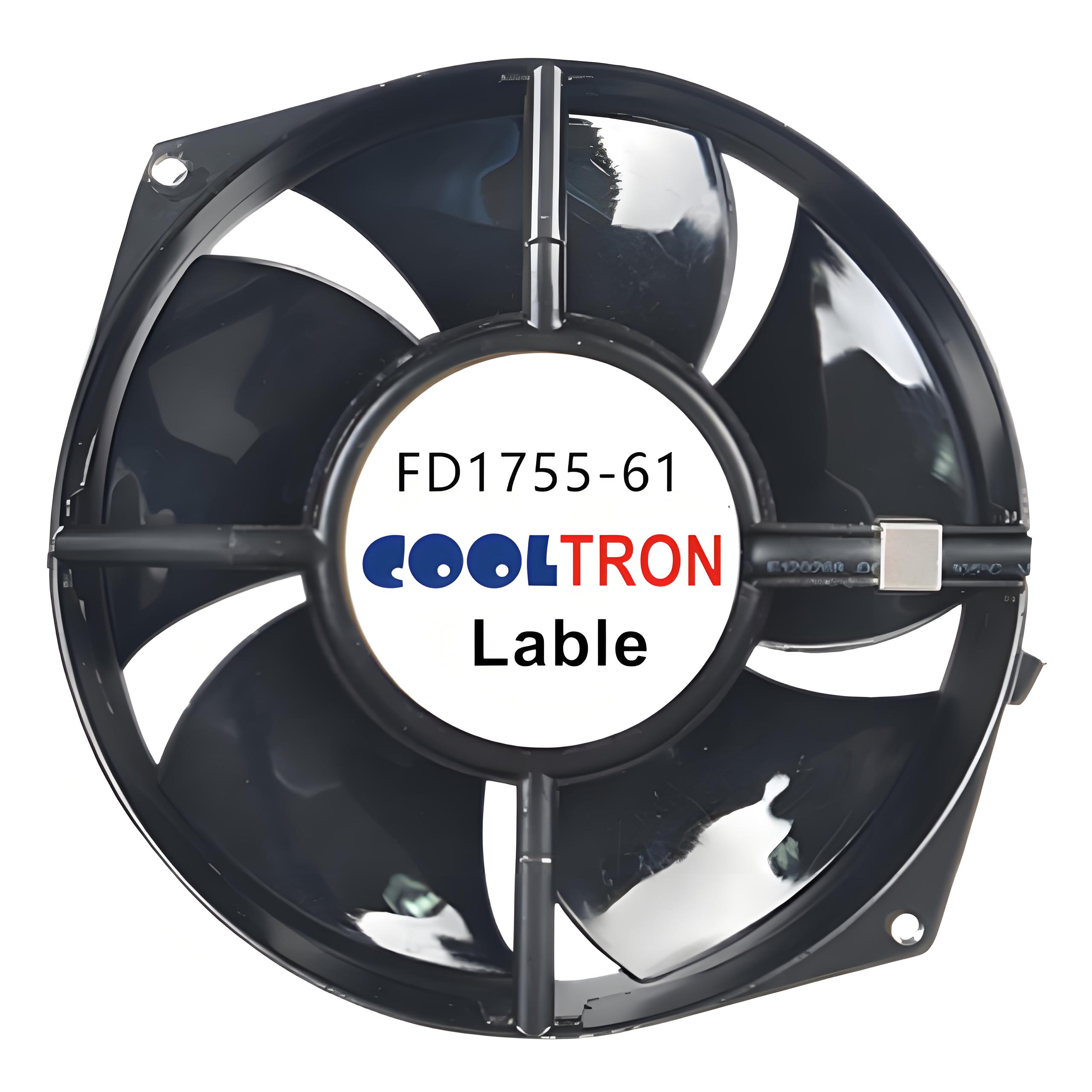
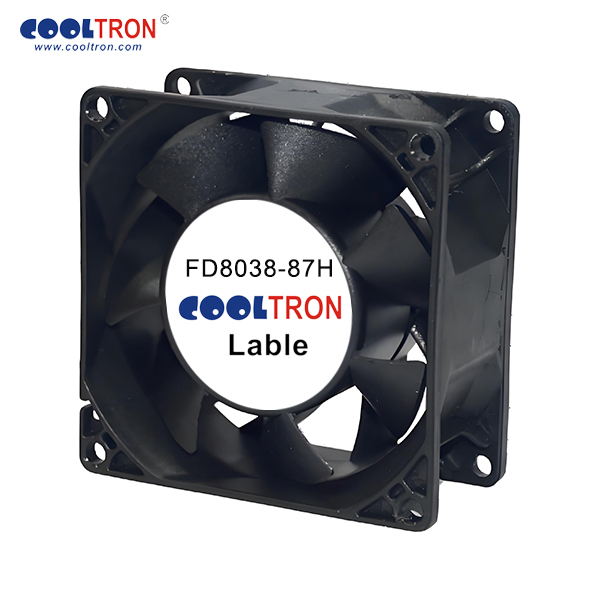
As a custom thermal solution provider, Cooltron supplies reliable DC axial fans and AC axial fans for vending machine OEMs, including commonly used sizes such as 80×80×25mm, 92×92×25mm and 120×120×38mm.
Explore Cooltron cooling fans →
Why Vending Machines Need Reliable Cooling Fans
A vending machine is a compact electromechanical system with multiple heat sources running simultaneously — and no one watching over it.
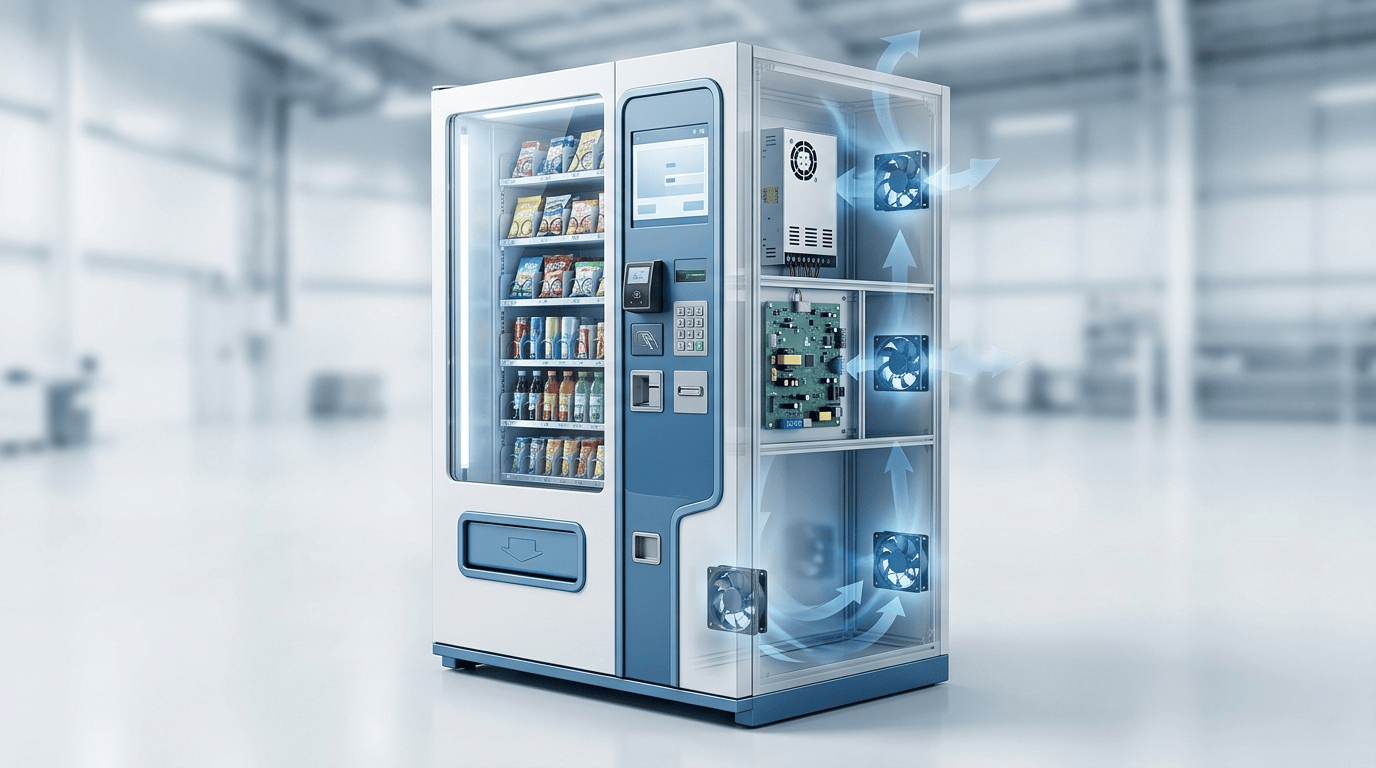
Typical heat sources include:
Refrigeration system — Beverage vending machines, fresh food vending machines and temperature-controlled cabinets require stable condenser cooling. If condenser heat is not removed effectively, the compressor may run at higher load, increasing energy consumption and reducing system reliability.
Power supply module — AC/DC power supplies, transformers, relays and power conversion boards generate heat during continuous operation. Poor ventilation can shorten component lifetime.
Control boards and communication modules — Smart vending machines usually include PCBs, sensors, wireless communication modules, IoT control units and payment systems. These electronic components require stable airflow to prevent overheating.
Display and payment systems — Touchscreens, LED displays, QR code scanners, card readers and cameras may generate additional heat, especially in modern smart retail terminals.
Mechanical dispensing components — Motors, solenoids and actuators generate intermittent heat during frequent operation, especially in high-traffic vending locations.
All of this happens inside a sealed cabinet. Without adequate airflow, heat accumulates, components degrade faster, and field failures become a matter of when, not if.